
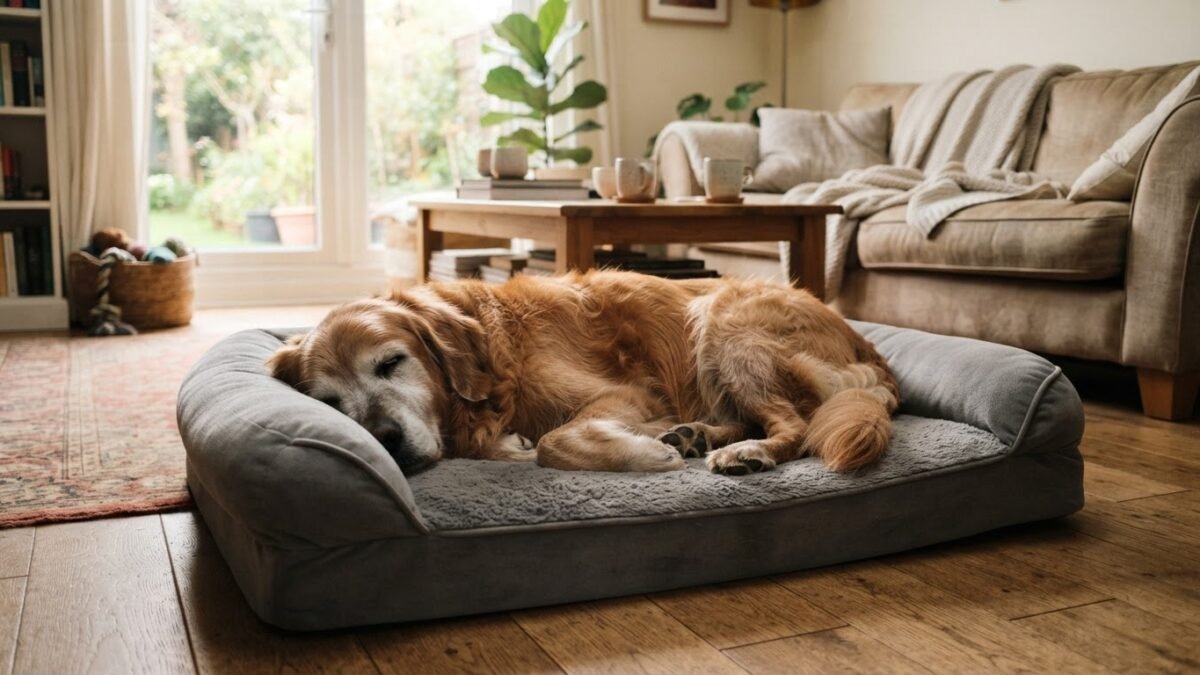
Quick answer: The best orthopedic dog bed has a thick, supportive foam base that does not flatten under your dog’s weight, a removable washable cover, and a low entry height so a stiff or senior dog can step on easily. For large dogs with arthritis, look for solid memory foam or high-density support foam thick enough that their hips and shoulders do not touch the floor. Choose a waterproof liner if your dog has accidents.
Last reviewed: November 27, 2026.
Key takeaways
- Foam quality matters more than thickness alone: A dense foam that springs back gives better support than a thick, soft one.
- Do the “hand test”: Press down where your dog’s hip would rest. If you feel the floor, the bed is too thin for that dog.
- Low entry helps: Senior dogs benefit from a low front edge or a bed without bolsters on one side.
- Washability is essential: A removable, machine-washable cover and a waterproof liner extend the bed’s life.
What makes a bed “orthopedic”?
“Orthopedic” is widely used as a product label, but the word alone does not prove that a bed has been clinically tested or will treat a joint condition. For everyday comfort, look for a foam core that supports your dog without bottoming out, a washable cover, and an entry height your dog can manage. Ask your veterinarian for advice when pain, arthritis, or post-surgical recovery is involved.
Best orthopedic dog beds
1. Big Barker orthopedic bed: best for large and giant breeds
Big Barker is built specifically for large dogs and uses thick, high-density foam designed to resist flattening. It is expensive, but it suits heavy dogs that compress cheaper beds quickly.
Check Big Barker beds on Amazon
2. PetFusion Ultimate Dog Bed: best memory foam with bolsters
PetFusion beds combine a memory foam base with raised bolsters, which many dogs like as a headrest. The bolsters can make entry harder for very stiff dogs, so check the front entry height.
Check PetFusion beds on Amazon
3. Furhaven orthopedic beds: best budget range
Furhaven offers many shapes and sizes at lower prices, including flat mattress styles and sofa styles. Choose a solid foam option rather than an egg-crate option for dogs that need more support.
4. Waterproof orthopedic bed: best for incontinence
For senior dogs with accidents, a waterproof inner liner protects the foam, and a washable cover keeps the bed hygienic.
Browse waterproof orthopedic beds on Amazon
5. Elevated cooling cot: best for hot climates
A raised mesh cot is not a foam bed, but it keeps a dog off hot or cold floors and allows airflow. It can work as a second bed for warm months or outdoor use, though dogs with severe joint pain usually prefer foam.
Browse elevated cooling cots on Amazon
Foam types compared
| Fill type | Support | Durability | Best for |
|---|---|---|---|
| Solid memory foam | High, contours to the body | Good | Arthritis and pressure relief |
| High-density support foam | High, firmer | Very good | Heavy dogs |
| Egg-crate foam | Moderate | Fair | Small, light dogs |
| Shredded foam or polyester fill | Low to moderate | Can flatten | Healthy dogs |
How to choose the right size and thickness
- Measure your dog sleeping stretched out: Measure nose to tail base and add several inches so their legs do not hang off.
- Match thickness to weight: Heavier dogs need thicker, denser foam. Use the hand test to check.
- Check the entry height: Senior dogs should be able to step on without climbing.
- Confirm the cover is removable and washable: Look for a sturdy zipper and a liner that protects the foam.
- Place it well: Put the bed where your dog already likes to rest, away from drafts, and on a non-slip surface. A rug with a non-slip backing under the bed can help on smooth floors.
Frequently asked questions
Do orthopedic beds really help dogs with arthritis?
A supportive bed may improve resting comfort, but evidence that a particular retail bed treats arthritis is limited. It is not a substitute for veterinary diagnosis, pain management, weight control, or an individualized exercise plan.
How thick should an orthopedic dog bed be?
It depends on your dog’s weight. Small dogs may be comfortable on thinner foam, while large and giant breeds need thicker, denser foam. The key test is that your dog’s hips and shoulders do not press through to the floor.
Is memory foam good for dogs?
Yes, for most dogs. Memory foam contours to the body and spreads pressure. Some dogs that run hot may prefer a cooling gel layer or a cooler sleeping surface.
How long does an orthopedic dog bed last?
Quality foam beds can last several years. Replace the bed if the foam stays compressed, smells even after washing, or no longer springs back.
Should a senior dog bed have bolsters?
Bolsters can support the head and give a sense of security, but they can make entry harder. Choose a bed with a low front entry if your dog struggles to step up.
Comfort is not a treatment plan
A supportive bed may make resting more comfortable, but it does not treat osteoarthritis or replace veterinary pain management. If your dog is stiff, limping, or struggling to rise, ask your veterinarian for an assessment rather than relying on a bed marketed as “orthopedic.”
Related guides
Best dog ramps for cars and SUVs · Joint supplements for senior dogs
This article is for general information and is not veterinary advice. It contains affiliate links. As an Amazon Associate, we may earn a commission from qualifying purchases at no extra cost to you.

2 comments