Editorial disclosure: This is a research-based buying guide, not a hands-on product test. Product details and availability may change; confirm current specifications with the manufacturer or seller. As an Amazon Associate, we earn from qualifying purchases, and we may earn commissions from other qualifying links.
Quick answer: If your priority is genuinely hands-off mopping, look for a system with mop washing and drying rather than relying on a simple pad. If you have very high-pile rugs, cluttered floors or lots of obstacles, examine independent navigation and carpet-cleaning tests before committing. The Q7 TF+ makes more sense when reliable mapping, reduced hair tangles and self-emptying are the features you will actually use.
What you need to know before buying
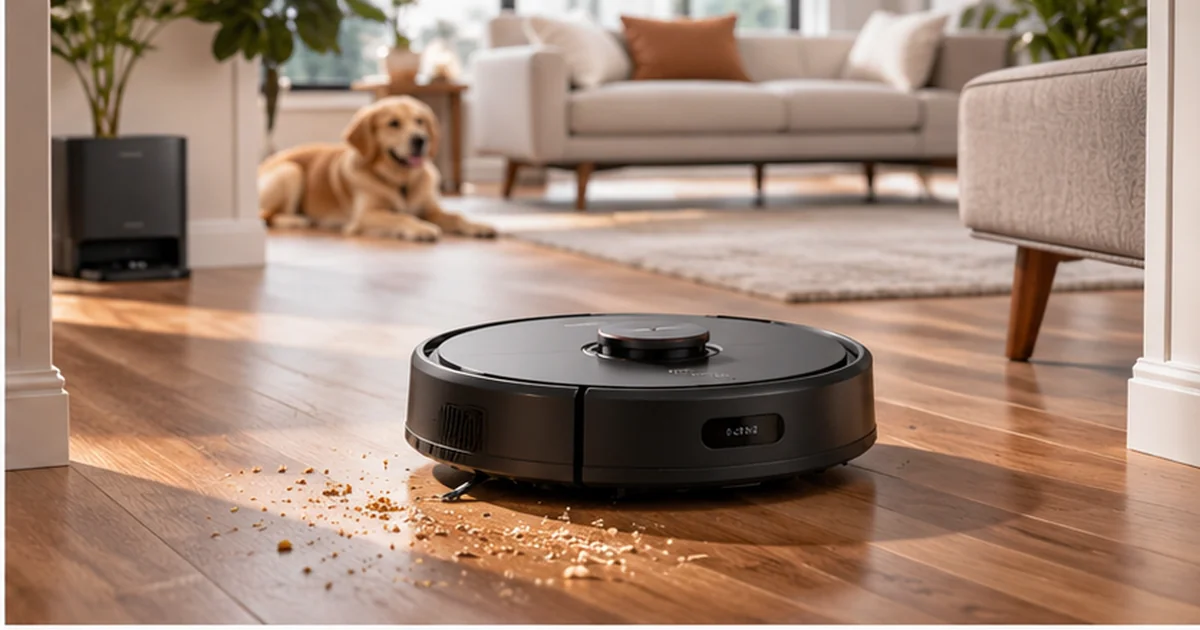
The Roborock Q7 TF+ is listed with 10,000Pa suction, a dual anti-tangle brush system and a self-emptying dock rated for up to seven weeks of debris storage.
Robot vacuums have changed a lot since the early machines that bumped randomly into furniture legs and needed their brushes cut free of tangled hair every few days. Many current mid-range models map the floor plan with lasers, raise suction when they reach a rug, mop hard floors and empty their own dustbins for weeks at a time.
The Q7 TF+ aims to offer those hands-free conveniences without flagship pricing. Its listed features include HyperForce suction, a Dual Anti-Tangle brush system, simultaneous vacuuming and mopping, and the compact RockDock Plus self-emptying station.
Does it suit homes with pets, rugs and hard floors, or are there limits to know before you buy? In this guide we go through its listed cleaning features, navigation, mopping and the trade-offs, based on the manufacturer’s specifications rather than hands-on testing.
Key specifications at a glance
These figures come from the product listing as summarized in this article; confirm them on the current seller page.
| Feature | Listed detail |
|---|---|
| Suction | 10,000Pa HyperForce, with automatic carpet boost |
| Brush system | JawScrapers comb main brush and an anti-tangle side brush |
| Dock | RockDock Plus auto-empty base, 2.7 L sealed dust bag, up to 7 weeks between changes |
| Dock size | 212 × 178 × 259 mm |
| Mopping | Removable water tank and microfiber pad, three water-flow levels, DEEP mopping mode |
| Navigation | PreciSense LiDAR with multi-floor maps, no-go zones and directional cleaning |
| Smart features | App control, scheduling, Alexa and Google Home voice control, child lock |
| Wi-Fi | 2.4GHz only during pairing |
Suction power and carpet cleaning (10,000Pa)
The headline specification on the Q7 TF+ is its 10,000Pa HyperForce suction rating. Many budget and mid-tier robot vacuums are rated lower, and a lower rating can leave fine grit, tracked-in sand and embedded pet hair behind in carpet fibers and floorboard seams.
A higher number suggests more airflow for low- and medium-pile rugs, though real results also depend on brush design and floor contact. Roborock pairs the motor with automatic carpet boost: instead of running at maximum fan speed across bare hardwood, which wastes battery and adds noise, the robot detects carpet and raises suction, then lowers it again on hard flooring.
Dual anti-tangle system: built for pet hair
If you share your home with shedding pets or long-haired family members, brush maintenance is often the biggest hidden chore of owning a robot vacuum. Traditional bristle rollers wrap hair around their axles, choke airflow and force you to cut it free.
The Q7 TF+ uses a two-part anti-tangle design:
- JawScrapers comb main brush: Comb teeth sit alongside the main roller and are intended to guide hair into the suction chute rather than letting it coil around the ends.
- Anti-tangle side brush: The corner brush has an angled arm designed to sweep dust and fur from baseboards and chair legs without twisting long hairs around the spindle.
Together, these should keep airflow more consistent across scheduled runs and reduce hands-on upkeep.
Seven weeks of hands-free self-emptying
The “+” in Q7 TF+ refers to the RockDock Plus auto-empty base. After the robot finishes vacuuming and docks to recharge, a suction motor in the base pulls the collected dirt, dust and pet dander from the robot’s bin into a 2.7-liter sealed dust bag.
- Up to 7 weeks between changes: Depending on home size and the number of pets, a single bag is listed to hold up to seven weeks of debris.
- Sealed bag changes: When you lift a full bag out of the dock, a collar seals the opening, which helps limit dust exposure compared with emptying an open bin over the trash.
- Compact footprint: At 212 × 178 × 259 mm, the dock is smaller than many mop-washing towers and is easier to tuck beside a console table or into a hallway corner.
Simultaneous vacuuming and mopping
In addition to dry vacuuming, the Q7 TF+ has a removable water tank and microfiber mop pad so it can vacuum and mop at the same time. The suction picks up crumbs and pet hair at the front while the damp pad wipes fine surface dust behind it, which can leave tile, vinyl and sealed wood floors cleaner than vacuuming alone.
In the Roborock app you can set three water-flow levels. Low flow suits hardwood, while high flow is meant for tracked-in footprints in entryways and kitchens. A DEEP mopping mode slows the robot and overlaps passes for more thorough wiping.
Reality check: The Q7 TF+ uses a stationary flat mop pad rather than spinning scrubbers or an automatic pad-washing dock, so it is best suited to daily maintenance mopping. You will need to detach and rinse the microfiber cloth by hand, and stubborn, dried-on spills will still need manual cleaning.
PreciSense LiDAR navigation and app customization
Navigation is what separates a reliable daily helper from a gadget that gets stuck under dining chairs. The Q7 TF+ uses a top-mounted LiDAR turret that scans rooms 360 degrees to build a floor map, including in dark rooms.
Once mapped, the app offers room-by-room control:
- Multi-floor mapping: Save separate maps for multiple levels of your home; carry the robot upstairs and it should recognize which floor it is on.
- No-go zones and invisible walls: Draw virtual boundaries to keep the robot away from pet bowls, charging cords or high-pile rugs.
- Directional cleaning: Set the robot to run parallel to hardwood planks or tile lines, which can help pull fine dust out of seams.
- Scheduling and voice control: Schedule a kitchen cleanup after dinner, trigger spot cleans through Amazon Alexa or Google Home, and use child lock or off-peak charging.
Pros and cons of the Roborock Q7 TF+
Pros
- 10,000Pa suction rating for carpet and heavy debris.
- 7-week self-emptying dock with sealed 2.7L bags.
- Dual anti-tangle brushes for the main roller and side brush.
- LiDAR mapping with multi-level maps, no-go zones and directional paths.
- Compact base station suited to apartments and smaller spaces.
Cons
- Manual mop maintenance: the microfiber pad has to be attached, removed and washed by hand.
- 2.4GHz Wi-Fi only: it does not pair directly over 5GHz bands.
Final verdict: should you buy it?
If you want a low-maintenance robot vacuum that handles pet hair, carpets and daily hard-floor dust without flagship pricing, the Q7 TF+ is a strong value for its feature list. Its suction rating, anti-tangle brushes, LiDAR navigation and self-emptying dock target the pain points that matter most in day-to-day living.
Look elsewhere if you want dual spinning mop pads and a self-washing base station. Confirm the current price, specifications and reviews on the seller listing before you order.
Practical buying considerations
What the dock does—and does not do
A self-emptying dock solves the small, frequent chore of emptying the robot’s dustbin. It does not mean the entire cleaning system is maintenance-free. Hair can still collect around moving parts, sensors need wiping, and a mop pad must be washed. The seven-week figure describes an upper-end interval under favorable conditions, not a guarantee for a household with multiple shedding pets. If you vacuum daily in a busy home, plan on checking the bag sooner. The real benefit is fewer interruptions between scheduled runs.
How to judge suction numbers
A high Pascal rating tells you something about the vacuum’s claimed pressure, but it cannot describe cleaning performance by itself. Brush design, floor contact, airflow path, navigation and the kind of debris all matter. A robot may pick up crumbs on tile beautifully yet struggle with hair embedded in a thick rug. For buyers, a better question is whether the brush system and navigation match the home’s flooring. The Q7 TF+ is especially relevant to homes with mostly hard floors and low- to medium-pile rugs.
Pet hair and long hair
The anti-tangle design is one of the more practical parts of this model’s feature list. Traditional rollers can accumulate hair near their ends, turning routine cleaning into a regular maintenance job. A comb-style main brush and redesigned side brush aim to reduce that problem. ‘Anti-tangle’ should not be read as ‘never inspect.’ Homes with long-haired pets or family members should still check the brush periodically and clear any accumulation according to the manual. That small habit helps preserve pickup and avoids unnecessary wear.
The honest story on mopping
Think of the Q7 TF+ mop as a damp maintenance wipe rather than a substitute for scrubbing. On sealed hard flooring, a regular light pass can help with fine dust and footprints after vacuuming. It is less convincing for sticky kitchen spills, grout buildup or dried stains. A stationary pad also needs manual cleaning. Before running any robot mop, confirm that the floor finish tolerates moisture and use the manufacturer’s approved water and cleaning solution guidance. The best setup often combines automated daily care with occasional deeper manual cleaning.
Mapping a real home
LiDAR mapping is valuable because it replaces random wandering with a planned route. The first run is still worth supervising. Remove charging cables, small toys and anything likely to catch under the robot. Once a map is built, create no-go zones around pet bowls, delicate furniture and areas with problematic rugs. Multi-floor homes add another consideration: the robot can map levels, but it cannot climb stairs or transport its dock. A thoughtful map saves more frustration than repeatedly changing suction settings.
Noise, timing and household routines
Automatic cleaning works best when it fits the way people use a home. A dock can be noticeably louder for a short period during emptying, even when the robot itself is tolerable. Schedule that moment for a time when it will not interrupt calls, naps or bedtime. In a pet household, introduce the robot gradually rather than forcing an anxious animal to tolerate it. Clear feeding areas before a run and keep cables and pet toys off the floor. Those mundane habits can make a larger difference than any app feature.
Consumables and ongoing costs
Robot vacuums bring recurring expenses: dust bags, filters, mop pads and replacement brushes. Before buying, check how easy compatible consumables are to find in your market. Also consider where the dock will live. It needs room to approach and depart, and the bag should be accessible for replacement. A compact base is an advantage in an apartment, but only if there is enough clear space around it. The cheapest listing is not necessarily the least expensive robot to maintain.
Who should skip this model
If your priority is genuinely hands-off mopping, look for a system with mop washing and drying rather than relying on a simple pad. If you have very high-pile rugs, cluttered floors or lots of obstacles, examine independent navigation and carpet-cleaning tests before committing. The Q7 TF+ makes more sense when reliable mapping, reduced hair tangles and self-emptying are the features you will actually use. It is an appealing maintenance helper, not a replacement for every kind of floor cleaning.
Questions readers often ask
Does the Q7 TF+ replace mopping by hand?
Not fully. Its flat microfiber pad works as a damp maintenance wipe for sealed hard floors, you have to rinse the pad by hand, and dried-on spills still need manual cleaning.
How often does the dock bag need changing?
It is listed at up to seven weeks, but that is an upper-end interval. Expect to check it sooner in a busy home or one with several shedding pets.
Is it a good choice for pet hair?
The comb-style main brush and anti-tangle side brush are designed to reduce hair wrap, but you should still inspect the brushes periodically and clear any buildup according to the manual.
Does it connect to 5GHz Wi-Fi?
The listing says pairing works over 2.4GHz only, so check your router settings before setup.
Final buying perspective
The strongest choice is the one that fits your routine, your available space, your budget and the maintenance you are comfortable doing. Compare the current listing against the practical considerations above, and avoid relying on promotional superlatives alone. If a specific feature is essential, verify it for the exact model and region before ordering.