
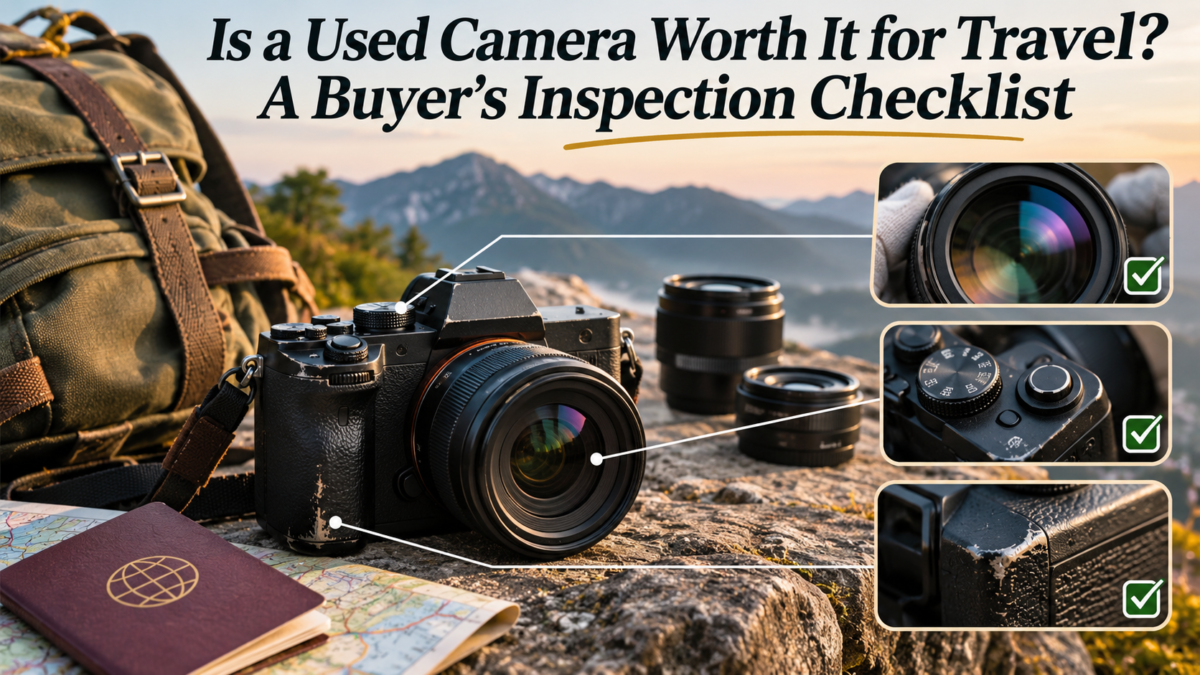
A used camera is worth considering when the complete kit suits your trip and the condition and return terms justify the saving. Start with what your current phone or camera cannot do, rather than buying a body simply because it once had a high retail price.
Define the photographs you want
List the situations that matter: family snapshots, distant subjects, low-light scenes, or video. Then identify the lenses, controls, and accessories needed for those situations. Check the packed weight of the body, lens, charger, spare batteries, and bag. A bargain body may become an expensive or inconvenient travel kit once the missing pieces are included.
Inspect the exact item
Request clear photographs of the body, lens mount, controls, ports, battery compartment, and screen. Ask about damage, moisture exposure, repairs, and intermittent faults. If shutter information is available, treat it as one data point, not a guarantee of remaining life. A clean exterior alone does not establish the condition of internal components or electronics.
Test features you will actually use
Where inspection or a return window allows it, test focusing, image capture, storage, video if needed, charging, and the buttons and dials. Review sample files at a sensible magnification. Check the lens for visible damage and seek a qualified camera technician’s inspection if you cannot judge the condition. Avoid DIY disassembly or cleaning that could damage the equipment.
Price the whole ownership experience
Confirm lens mount compatibility, included accessories, battery availability, repair options, and warranty or return arrangements. Check for applicable recalls using identifying details. Electrical Safety First recommends such checks for second-hand electrical purchases. Compare the total kit with newer alternatives, including keeping the equipment you already own. A lower sticker price is not useful if the kit stays at home. Electrical Safety First: safer online and second-hand shopping
Practical decision framework
| Factor | What to check | Limitation |
|---|---|---|
| Purpose | Identify the pictures and video you expect to capture | Avoid buying features without a use case |
| Lens | Confirm mount compatibility and included accessories | Inspect the exact listing |
| Condition | Ask about wear and inspect sample images if available | Seek professional inspection when uncertain |
| Controls | Check menus and ordinary functions before accepting the item | Use manufacturer instructions |
| Storage and power | Verify compatible cards and batteries | Check airline battery rules and avoid damaged batteries |
Purpose: what matters in practice?
Identify the pictures and video you expect to capture. Casual city photographs may need different equipment from wildlife photography. Avoid buying features without a use case.
For this part of the decision, write down what you already know and what remains uncertain. In particular, identify the pictures and video you expect to capture. If you cannot confirm the relevant information, leave that entry unresolved rather than treating an assumption as a verified feature.
Lens: what matters in practice?
Confirm mount compatibility and included accessories. A body-only price is not the complete kit cost. Inspect the exact listing.
For this part of the decision, write down what you already know and what remains uncertain. In particular, confirm mount compatibility and included accessories. If you cannot confirm the relevant information, leave that entry unresolved rather than treating an assumption as a verified feature.
Condition: what matters in practice?
Ask about wear and inspect sample images if available. Cosmetic marks do not necessarily establish image quality. Seek professional inspection when uncertain.
For this part of the decision, write down what you already know and what remains uncertain. In particular, ask about wear and inspect sample images if available. If you cannot confirm the relevant information, leave that entry unresolved rather than treating an assumption as a verified feature.
Controls: what matters in practice?
Check menus and ordinary functions before accepting the item. Unfamiliar controls can slow travel photography. Use manufacturer instructions.
For this part of the decision, write down what you already know and what remains uncertain. In particular, check menus and ordinary functions before accepting the item. If you cannot confirm the relevant information, leave that entry unresolved rather than treating an assumption as a verified feature.
Storage and power: what matters in practice?
Verify compatible cards and batteries. Extra equipment affects packed weight. Check airline battery rules and avoid damaged batteries.
For this part of the decision, write down what you already know and what remains uncertain. In particular, verify compatible cards and batteries. If you cannot confirm the relevant information, leave that entry unresolved rather than treating an assumption as a verified feature.
How to make the final decision
Start with the requirements that cannot be compromised, then compare the remaining options on the same basis. Keep the evidence beside each entry so you can revisit the decision if the itinerary, price or terms change. The framework above is intended to help you evaluate a specific situation, not to establish a universal ranking.
Before you decide: a quick checklist
- Define a photographic need before shopping.
- Request photos and a documented condition history.
- Test capture, focus, ports, and controls.
- Budget for lens, battery, charger, and service.
Frequently asked questions
Does a low shutter count guarantee a good camera?
No. It does not establish the condition of every component or rule out damage.
Should a beginner buy used?
It can be considered when the condition is clear and there is a workable remedy for faults. The exact offer matters more than the label.
How this guide was prepared
This is a research-based decision guide, not a hands-on product review. Recommendations about how to compare options are editorial judgments. No products were tested, no performance scores are claimed, and hypothetical examples are labeled. Check current manufacturer, airline, seller, or provider terms before acting.


1 comment