
Editorial disclosure: This is a research-based buying guide, not a hands-on product test or professional endorsement. Product features, prices and availability may change; confirm current details with Amazon or the manufacturer. As an Amazon Associate, we earn from qualifying purchases, and we may earn commissions from other qualifying links.
Compression cubes are only helpful if they fit your actual bag. Measure the inside of the carry-on, accounting for wheel housings and curved corners, before buying a six-piece set. A cube that looks tidy in a product photograph may waste space if it does not match the suitcase layout. The best setup often uses fewer cubes than the package includes. Plan around your clothing categories and the shape of the case rather than filling every available compartment.
At a glance
Frequent travelers who switch hotels, share luggage or pack for different activities often gain the most from compartmentalization. Someone taking a single overnight trip may be fine with one small pouch. Consider the BAGSMART cubes if their sizes match your suitcase and you want separated clothing categories. Consider the Zora toiletry organizer if you carry enough small items to justify multiple compartments. Neither purchase replaces checking your airline’s size and weight restrictions.
What compression zippers really do
A compression cube presses soft clothing into a smaller volume by bringing two zipper tracks together. It does not make clothing lighter or create unlimited space. Heavy jeans and structured garments compress differently from knitwear. Overstuffing can strain zippers and make the suitcase harder to close. If you travel with an airline weight limit, compression can actually make it easier to pack more weight than allowed. Use it for organization and modest volume savings, not as a guarantee of a particular percentage.
A simple five-day packing example
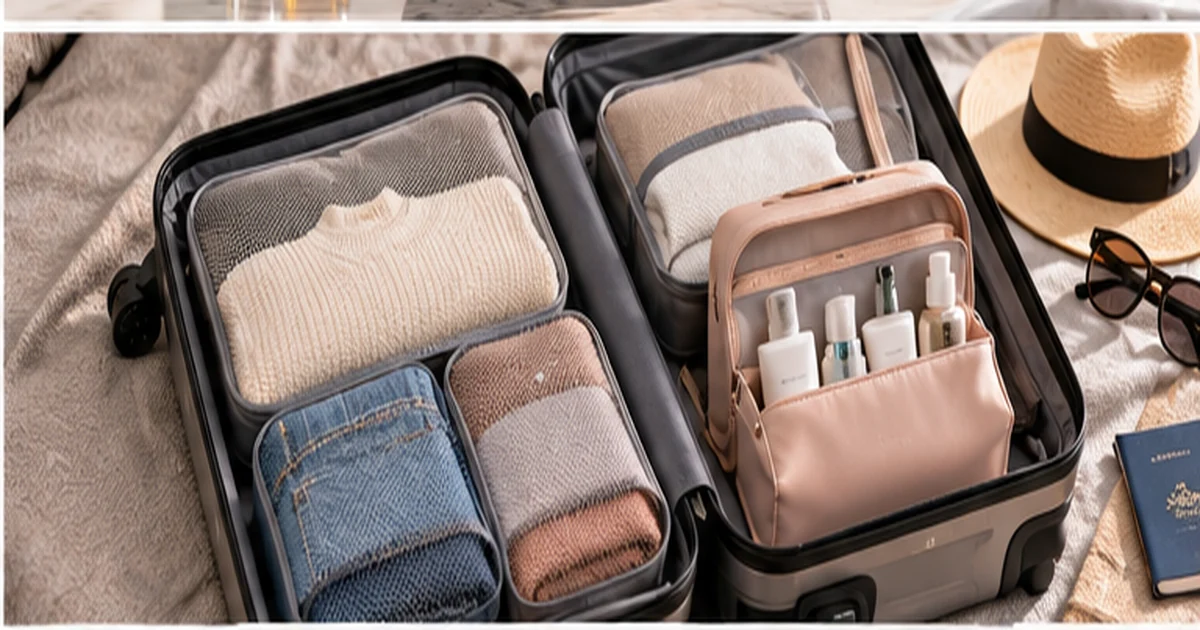
For a short trip, one medium cube could hold tops, another bottoms, and a small cube underwear or sleepwear. A spare lightweight pouch can separate used clothing on the return journey. Pack shoes in their own bags so the soles do not touch clean fabrics. Keep one change of clothes accessible if you are checking a larger suitcase. This approach is less impressive than squeezing an entire wardrobe into a carry-on, but it is easier to unpack and maintain.
Toiletry organization is a separate problem
The BAGSMART Zora bag is presented as a multi-compartment organizer with wet/dry sections. That can keep makeup tools, toothbrushes and bottles from mixing together. Still, a water-resistant lining does not mean a container is guaranteed leakproof when a cap opens under pressure. Put liquids in sealed bags when necessary and avoid packing fragile glass bottles against hard objects. The best toiletry bag is one that opens clearly, cleans easily and fits your travel routine.
Airport liquid rules vary
The familiar limit is 100 ml or 3.4 oz per container, but airport screening rules can differ by country, terminal and equipment. A pouch inside a toiletry bag may not satisfy a requirement for a separate transparent liquids bag. Check the departure and transfer airports before leaving. Keep essential medication and documents in accordance with the airline and airport rules. A well-organized toiletry kit makes screening easier only when it follows the actual requirements of your route.
Packing for easy access
Put the items you need first near the top: a charger, travel documents, a light layer and any permitted liquids required for screening. Keep the toiletry bag away from delicate electronics where a leak could cause damage. If you use a backpack rather than a wheeled case, choose cube sizes that stack vertically and do not create an awkward bulge. The goal is to find things without emptying the entire bag in a crowded airport.
Durability and cleaning
Inspect zipper stitching, mesh panels and the corners where fabric is pulled during compression. Those points often experience more stress than the broad flat panels. A smooth zipper is more useful than an extra decorative pocket. After travel, empty the cubes and let them dry before storage, especially if they held damp laundry. Wipe toiletry compartments according to the care label. Small maintenance habits extend the usefulness of inexpensive organizers.
Before you order
Check the exact model, size or plan offered in your country. Read current instructions and eligibility terms, compare total costs rather than the headline price, and make sure the feature that attracted you is actually included in the listing. These steps are especially important when a product has several generations or regional variants.
Frequently asked questions
Do compression packing cubes really save space?
They can reduce the volume of soft clothing, but they do not make it lighter or create unlimited room. Use them mainly for organization and modest savings, and avoid overstuffing, which can strain the zippers.
How many cubes do I need for a short trip?
Often fewer than the set includes. For a five-day trip, one medium cube for tops, one for bottoms and a small one for underwear or sleepwear can be enough, plus a spare pouch for used clothing.
Is a water-resistant toiletry bag leakproof?
No. A water-resistant lining does not guarantee that a bottle cap will not open under pressure, so use sealed bags for liquids when necessary and avoid packing fragile glass against hard objects.
Does a toiletry organizer satisfy airport liquid rules?
Not necessarily. Screening rules differ by country, terminal and equipment, and a pouch inside a toiletry bag may not replace a separate transparent liquids bag. Check your departure and transfer airports before you travel.
Final verdict
Buy cubes and a toiletry organizer only if they fit your suitcase and the way you pack. The BAGSMART cubes suit people who want separated clothing categories, and the Zora organizer suits people who carry many small items. Measure your bag and check your airline’s size and weight limits before you order.


